
Guest Post: BowTiedMahi Amazon FBA Update

Today’s post features a special guest: BowTiedMahi Below are his thoughts, and I’ll follow up with a conclusion at the bottom.
Hello Bum subscribers - my name is BowTiedMahi and I resell on Amazon for a living.
What started as a fun project packing soap and soup cans in my bedroom has slowly evolved into a 7 figure business with 4 full-time employees.
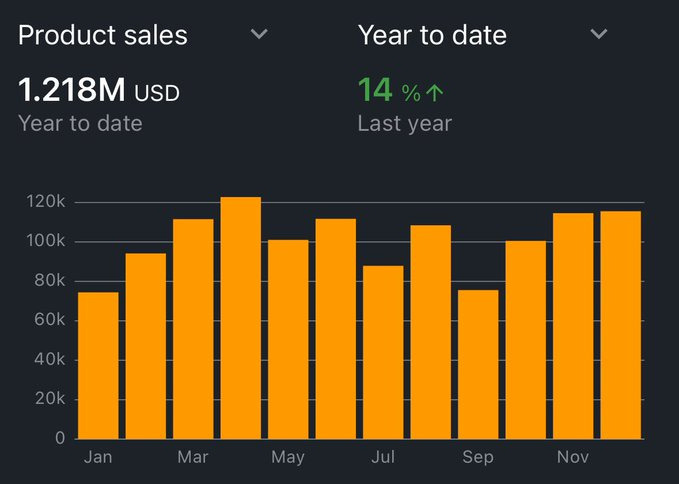
In a world where everyone is willing to pay a premium for convenience, you can make thousands of dollars selling everyday items online for a 1.5-2x markup.
I wrote an article for this newsletter almost three years ago, but a lot has changed and I wanted to give some updates on how you can get started with selling on Amazon in 2026.
How Amazon FBA Works
I could write an entire book about how this business works, but for the sake of this article I will try to keep things short and simple to understand.
If you’re interested in learning more, I have some free articles on my Substack (which I am currently in the process of updating).
Here is a very basic step-by-step explanation of how it works:
Find discounted products from online retail stores (Walmart, Target, Kohl’s, etc.)
Order them to your house (or a prep center) with 3-7 day shipping times
Items get sent to an Amazon Fulfillment Center
Amazon redistributes those items to other fulfillment centers
Items become available for sale on Amazon and can be purchased with prime shipping (Amazon takes care of shipping, customer service, etc.)
You get paid
This is a very beginner friendly business model because it doesn’t require any product creation or ads.
The data shows us what customers are already buying - we just need to find those items at a low enough price to make a profit.
Why Amazon FBA is perfect for Credit Card Maxxing
One of the reasons Bum and I collab on occasion is because our niches share a symbiotic relationship.
The goal of an Amazon business is to buy lots of inventory from retail stores and sell for a profit - since we’re not buying from manufacturers, we can use credit cards without worrying about transaction fees.
The goal of credit card churning is to manufacture as much spend as possible to maximize cashback / rewards (as well as sign up bonuses).
These two things go hand in hand, as spending more money on inventory not only leads to generating more profit for the business but also generates more rewards from credit cards.
Instead of using something like a buying group to break even / eek out a small profit for rewards, you can build a business that generates a meaningful amount of profit while farming even more points and cashback.
One caveat I will give is that some of the tactics become very annoying to use at scale.
I am not doing every little thing to squeeze out as many points as I can, as I make more money by focusing on actually making my business more profitable.
I will get a new card every few months for the free points but that’s about it - I tend to not use Fluz because my Citi cards have really low credit limits compared to my business cards and I’m regularly spending between $60,000-$70,000 per month on inventory.
How to Start Selling on Amazon in 2026
As mentioned previously, there’s way too much to cover for me to give you a “how to get started” section that will tell you everything you need to know - I highly encourage you to read my Substack if you want to learn more about starting an Amazon business.
In this post I will give a timeline for how someone should be spending their first 6 months, using weeks as a benchmark.
Setup (Day 0)
We can’t actually get started with our business until we have some things set in place.
Before getting any work done, we need to do the following:
Set up a Professional Amazon Seller account
Purchase the necessary supplies for packing / shipping items (see here for more info)
Set up Keepa and SellerAmp (the two software tools you need to do product research)
Once we have this infrastructure set up, we can get started - you don’t need a logo, website, LLC, etc.
Building the Foundation (Weeks 1-2)
Amazon has a lot of basic tasks that you need to perform on a regular basis such as:
Adding items to your inventory
Creating an FBA shipment
Adjusting your prices
Prepping products
Shipping products
The great thing about these tasks is that you only need to learn how to do them once and you can do them forever without thinking about it.
If you need assistance with navigating the Amazon seller portal, Amazon themselves have some decent content on how to use their platform on Seller University.
After that, we need to focus on sourcing.
Sourcing is the number one skill you need when it comes to reselling on Amazon.
The model is incredibly simple - buy cheap shit, and sell on Amazon for a higher price.
To scale the business, all you have to do is sell more items.
There is no complex systems involved - the amount of money you can make is directly tied to your ability to source profitable inventory (and the amount of capital you have obviously).
Get started by learning the two basic sourcing methods - reverse sourcing and manual sourcing.
I have a basic overview of both on my Substack.
Grinding Away (Weeks 3-10)
This is the period where most people quit.
I’ve already explained that sourcing is the heart and soul of this business - now it’s time to dedicate 90%+ of your time to it.
Sign up for email lists of every retail site you come across so you can be notified when they’re having sales.
If you manage to find profitable items by looking at other sellers’ storefronts, save them in a spreadsheet and check back every few weeks to see if they’ve added new items you can steal.
Start tracking brands you have the ability to sell, which websites sell those brands, and where you can get the biggest discounts on those items.
Having an in-depth understanding of the marketplace will allow you to get your items at the cheapest possible price, giving you an edge over the competition.
Sourcing profitable items is a slow grind where you can go 3 hours without finding anything good and then find $2000 of profit in the next 30 minutes.
It can be really difficult to source when starting out, but the more time you spend tracking things the better.
I’ve been selling on Amazon for nearly 5 years and I sometimes I still feel like I’m not very good at sourcing - you just need to stick with it.
Freeing Your Calendar (Weeks 10-26)
At this point you’ve hopefully made some progress with sourcing have have gotten your first few sales on the platform.
While the sourcing grind doesn’t stop, we can look at some ways to make your business run more efficiently and buy some of your time back.
Consider getting an inventory management tool like Sellerboard or InventoryLab to help you stay organized and track your expenses (IL is more expensive but has some nice reporting features).
Get a repricing software so you don’t have to constantly change your prices by hand several times per day.
If prepping shipments is interfering with sourcing time, look into finding a prep center to handle your inventory for you (be ready to spend around $1.50-$2.00 per unit).
Consider hiring a part-time Admin VA (virtual assistant) from onlinejobs.ph to handle your menial tasks such as adding items to your inventory, updating spreadsheets and repricing products.
Once you’ve got all of that sorted, the majority of the game is to make sure you’re putting in the hours to source every week and selling more items than the previous month - there’s no secret technique that any of us larger sellers are hiding from you.
Credit Card / Rewards Setup
Since this is a rewards newsletter, I’ll give some insight on what cards / rewards system I currently use in my business and why.
Credit Card Cycling
Every month I cycle between three cards.
This allows me to start using a card the second the previous billing statement is over so I give myself the maximum amount of time to pay off the balance.
Example:
Card 1 billing statements ends March 4 and is due March 28, I start using it on March 5 so I don’t need to pay until the due date on April 28
Card 2 billing statement ends March 15 and is due April 8, I switch from card 1 to card 2 on March 16
Card 3 billing statement ends March 23 and is due April 17, I switch from card 2 to card 3 on March 24
Repeat the process to maximize time to pay off the balance
This might seem a tad extreme, but it allows me to hedge against anything going wrong with the logistics on Amazon’s side because sometimes shipments get delayed or go missing.
Cards I Use
I have two cards that I always use, and then one that I rotate in and out for the signup bonus before moving on to the next one.
Capital One Spark Cash Plus: This is the first business card I got when I began selling on Amazon, and to this day it’s still my favorite.
With a $150 annual fee, you get 2% cashback on all purchases - this fee is refunded if you manage to spend $150,000 within the calendar year (very easy to do at scale).
If you spend $30,000 in the first 3 months, you get a $2,000 cash bonus.
This cashback can be redeemed on Amazon at a 1:1 transfer ratio, and since you can buy gift cards on Amazon this basically allows you to redeem all of your rewards without it being taxable.
I personally find this card more appealing since I don’t travel very often anymore (and have more AMEX / Chase points than I know what to do with), but if you prefer optimizing for travel it may not be the best option.
AMEX Plum: Some of you have probably never heard of this card because it has a very specific niche, and it’s not very reward friendly.
That being said, it’s an amazing card to have if you run an inventory based business.
The Plum card gives you an extra 30 days to pay off your balance, effectively giving you a 60 day billing cycle instead of a 30 day billing cycle.
This is huge for Amazon sellers as sometimes it can take longer than 30 days to get paid out from when you purchase an item to it being shipped to the customer.
It also allows for flexibility when buying inventory during busier times of the year - instead of having to take out a loan to buy extra inventory on Black Friday I can just load up an extra $20,000 on my plum card and pay it off in January.
AMEX Platinum Business: This card is currently in my third “flex” spot since I managed to get a juicy 250,000 point SUB last year, but I’ll probably be cancelling it at some point this year since I don’t think I’ll be able to use the credits without inconveniencing myself. Other cards I’ve had in this slot include the AMEX Gold, AMEX Blue and Chase Ink Preferred.
My plan is to replace it with the Chase Ink Premier, another card similar to the Spark that just earns cashback since I have more points than I need and I like using the rewards to cover some of my expenses.
Other Rewards
My favorite method of earning bonus money is with Topcashback.
Topcashback is a browser extension that pays you cashback when you shop at certain retailers.
The cashback multipliers vary from site to site, and can increase or decrease during certain times of the year.
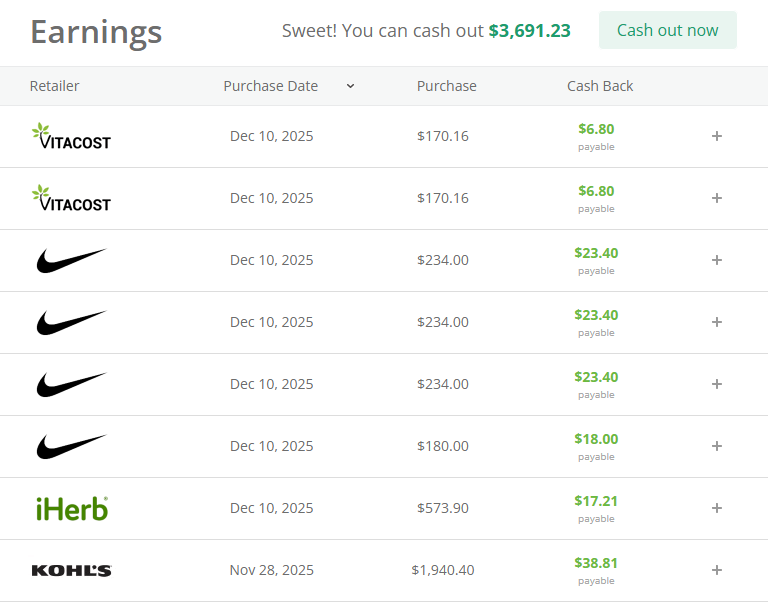
The main reason that I prefer TCB over the more popular Rakuten is because of the ways you can cash out your rewards.
With TCB, you have the ability to get gift cards (including visa cards) which are also given a bonus multiplier.
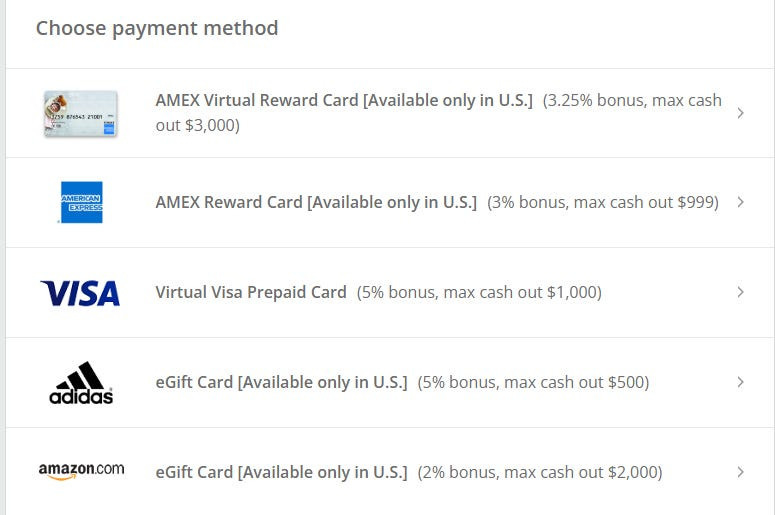
With this method I can convert all of my rewards into prepaid visa cards.
For a $5 fee I can have a physical version mailed to my house, which I do every 2 or 3 months (the fee is covered by the 5% bonus).
I call these “bird cards”, and they’re the reason I haven’t had to pay for groceries out of pocket in over a year.
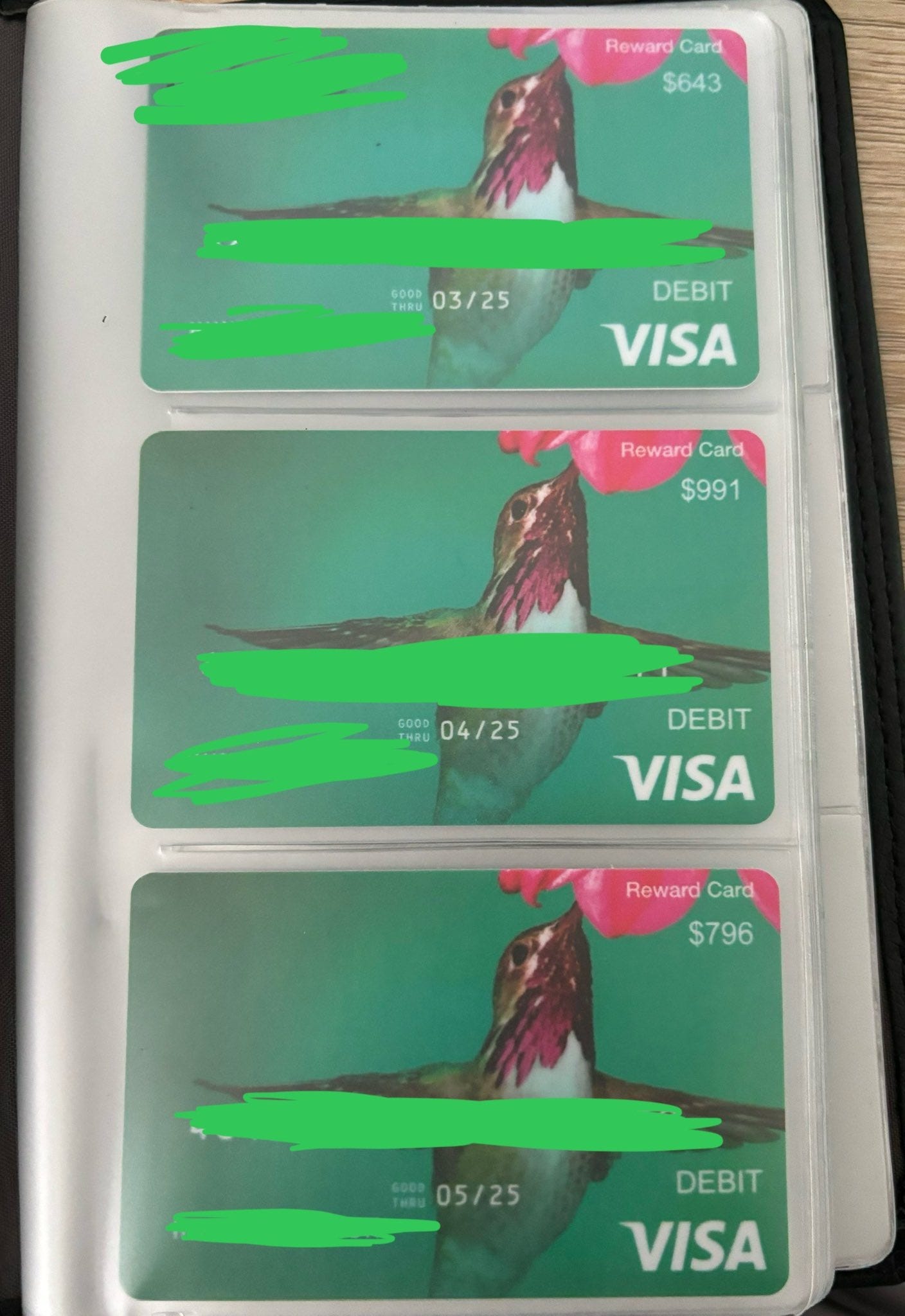
In the last 3 years I’ve redeemed over $21,000 worth of bird cards (with another $4,000 still unclaimed).
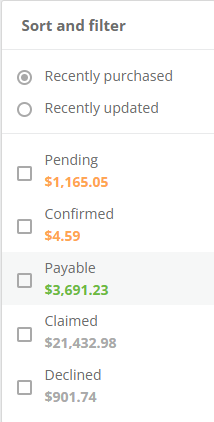
All of this was generated by clicking a button before checking out to buy inventory for my business.
Between making a profit on inventory, credit card rewards and cashback extensions you can rack up some serious cash with an Amazon business.
I’d like to thank Bum for the opportunity to write this post. If you’re interested in how to build an Amazon business from scratch and scale to six figures, check out my video course Arbitrage Tactics here.
Conclusion
BowTiedBum here. With certain MS methods getting more difficult, learning Amazon FBA is always a good option, and you’re building something real long term.
Good luck!
Disclaimer: None of this is to be deemed legal or financial advice of any kind.